
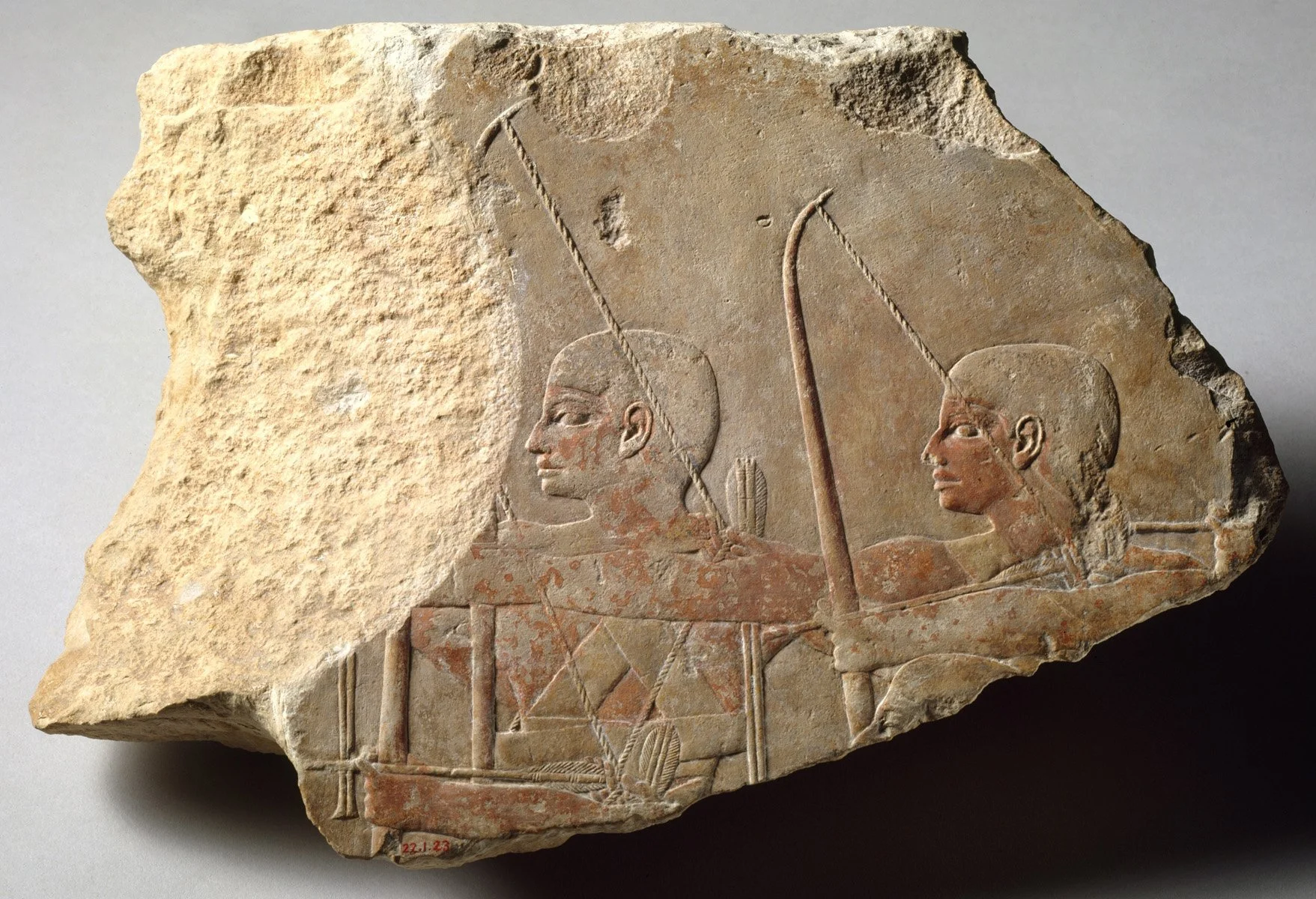
Archery in Ancient Egypt
The bow and arrow is one of the first weapons ever depicted in the hands of Egyptian warriors, and throughout pharaonic history, bow-troops remained central to the Egyptian military. From the earliest periods of Egyptian history until the beginning of the New Kingdom, Egyptian and Nubian archers fought on foot. From the early Eighteenth Dynasty onwards, a new type of archer appears—the chariot warrior. The introduction of the chariot into the Egyptian army occurred shortly after another key technological innovation: the composite bow.
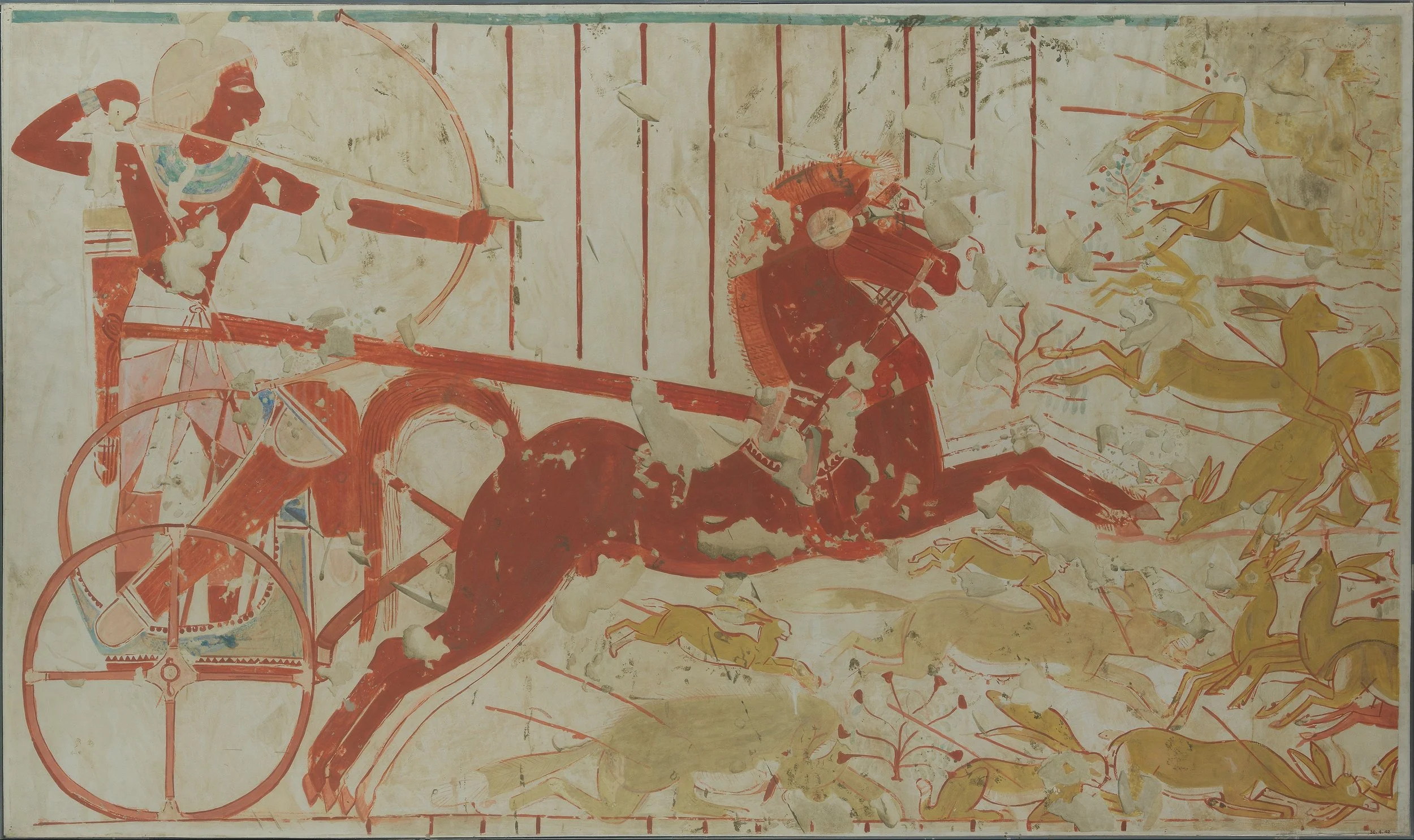
Ancient Egyptian Chariots: An Introduction
King Ahmose was the first pharaoh of the 18th Dynasty, a distinction he attained by expelling the foreign Hyksos Dynasty that had ruled northern Egypt for the previous century. In the years around 1550 BC, king Ahmose’s army successfully besieged the Hyksos capital of Avaris. The autobiography of a solider named Ahmose, whose father, Ibana, had also been a soldier, describes that prior to the siege he “followed the sovereign (may he live, prosper, and be healthy!) on foot behind his maneuvers in his chariot.”

Looking Through the Pylon
“Dignified and beautifully proportioned, it is symbolic of an attitude toward the dead their part in the hereafter, expressive, but respectful and reverential, which arose in the valley of the Nile centuries before Christianity and it consequently so detached from modern creeds, prejudices or sentiments that it can appeal to any belief.”
With these word s, Denison Olmstead, Professor of Astronomy and Natural Philosophy at Yale University laid the cornerstone of the New Haven City Burial Ground (now Grove Street Cemetery).

A Highlight of the GEM: Tutankhamun’s Restoration Stela
On November 1, the world celebrated the opening of the Grand Egyptian Museum, which more than fulfills the grandeur of its name. Its soaring atrium features a colossus of Ramesses II, and that pharaoh, who ruled nearly seven decades, would undoubtedly be thrilled to be the king that first greets visitors of the GEM. Now, visitors can ascend the dramatically lit Grand Staircase—with its impressive royal statuary, images of gods and kings embodying gods, shrines, columns, stelae, and sarcophagi—to the Main Galleries and the Tutankhamun Gallery. The design of the Main Galleries is inspiring, with three themes—society, kingship, and religion—placed parallel to one another, giving the visitor the opportunity to view the artworks chronologically across themes or to explore each theme from the Predynastic Period through the Roman Era, and then start again with a new theme. The Tutankhamun Hall displays every artifact from KV62—over five thousand of them!

Sometimes X does mark the spot …
On Christmas Eve, 2010, my team and I were nearing the end of the winter season of the Moalla Survey Project (a Yale University sponsored expedition that I directed under the auspices of the Egyptian Ministry of Antiquities). In preparation for surveying an area north of Moalla, I consulted a century-old article by Georg Schweinfurth, a German botanist and explorer, entitled “Die Umgegend von Schaghab und el-Kab (Ober-Ägypten).”

Dispatch from the Field: Greetings from Somers Clarke House
The Somers Clarke House is a dig house that features traditional mudbrick workmanship and is still used today during archaeological expeditions.

Dispatch from the Field: Sailing into the Desert
In week two of our expedition, we are sailing into the desert with predynastic rock art.

Dispatch from the Field: Greetings from Elkab!
Greetings from Elkab! We are a week into the summer field season of the Elkab Desert Survey Project.
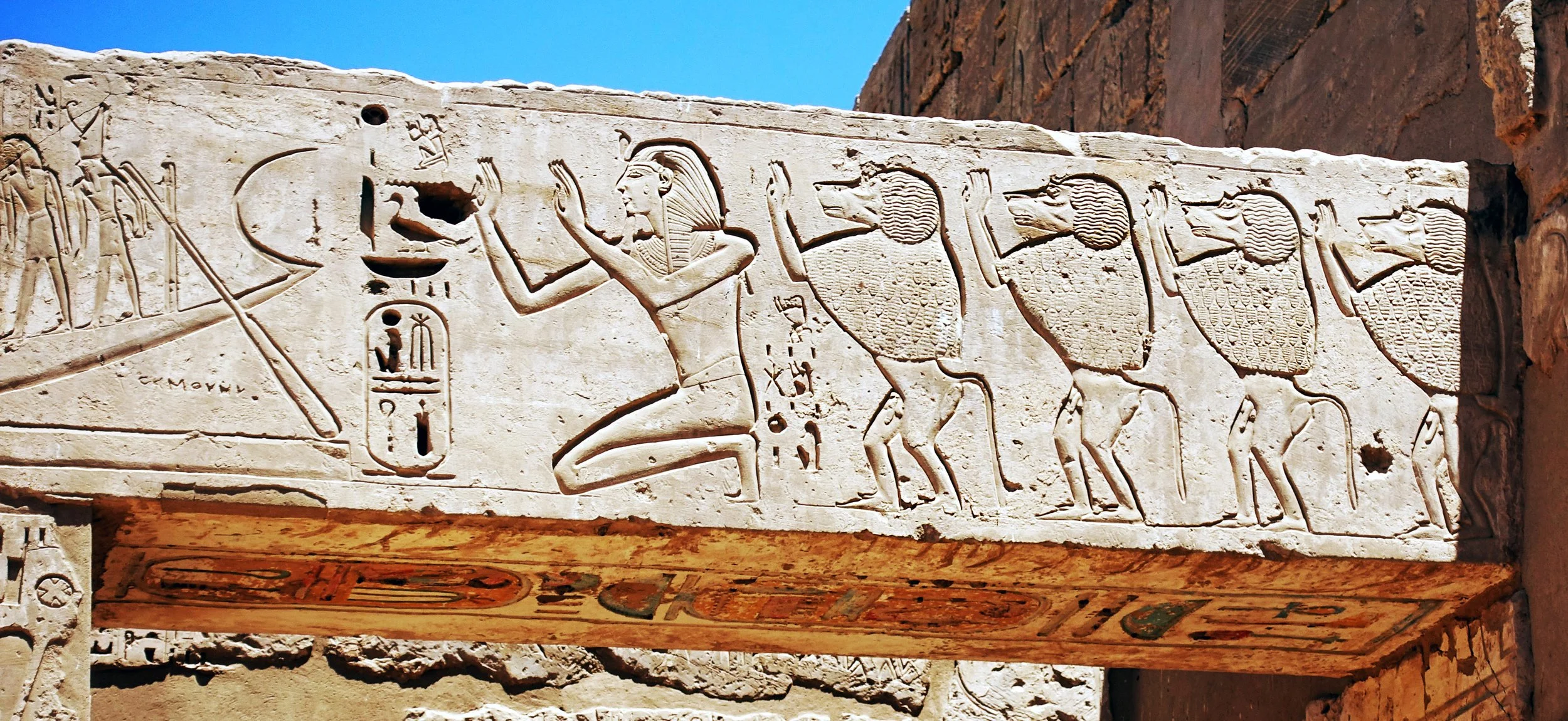
The Secret Language of the Baboons
Learn how short hieroglyphic texts demonstrate the three uses of hieroglyphic signs (phonogram, logogram, and determinative) as well as the flexibility of spelling, sign forms, and ability to create symbolic juxtapositions.
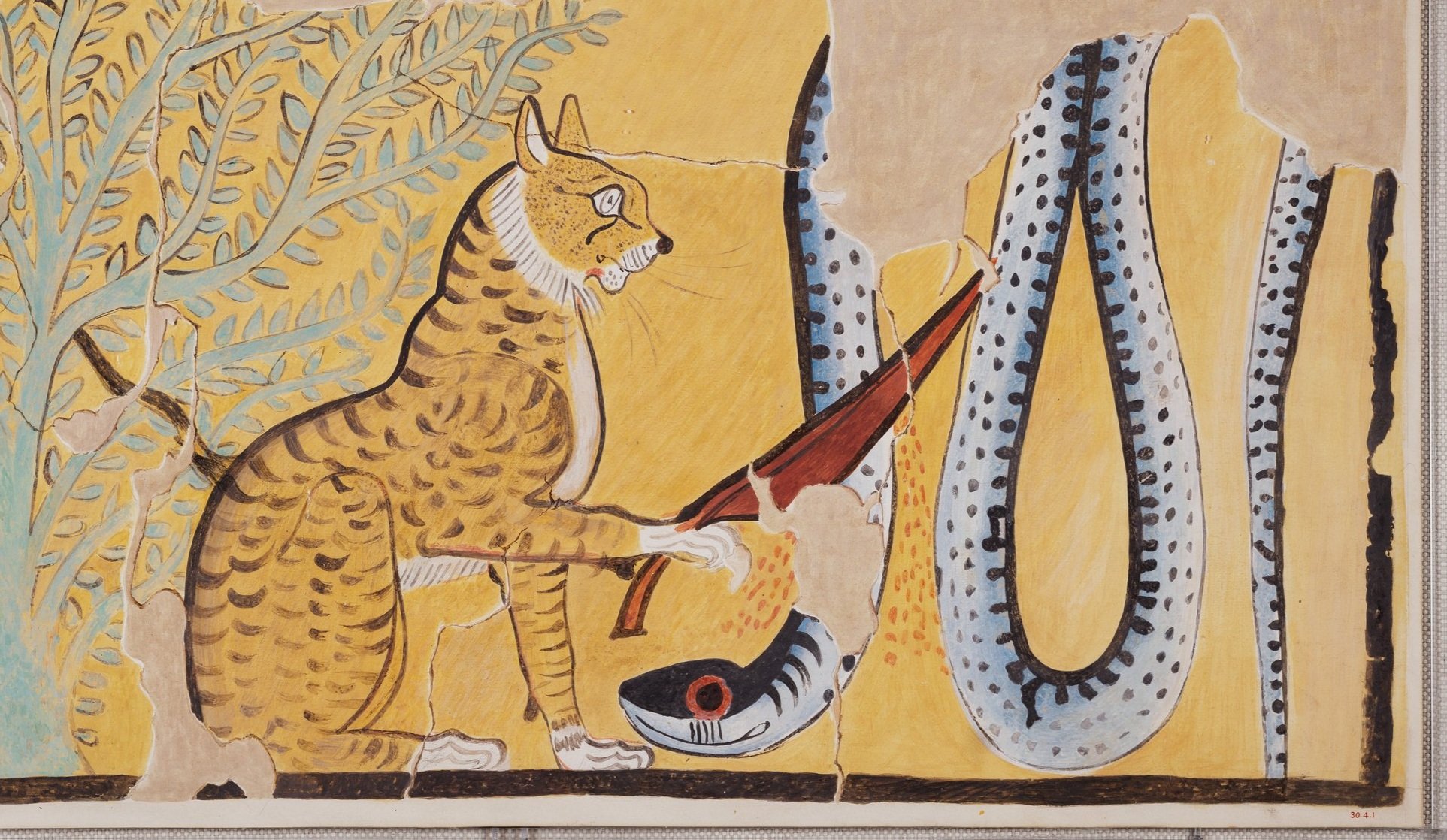
Praise to the Great Cat
The combination of an animal head with a human body is a distinctive feature of images of ancient Egyptian deities. Fully human or fully animal representations also appear. Amun, whose most common epithet in the New Kingdom is “king of the gods,” is most often shown in anthropomorphic form, although in Nubian temples he can have a ram head. The goddess Taweret, a protector of women and children, appears almost exclusively as a pregnant hippopotamus.

The Real Treasure of the Valley of the Kings
The spectacular royal tombs in the Valley of the Kings were intended to be the final resting place of the pharaohs of the New Kingdom and their (often golden) possessions. One of the smallest tombs in the valley, yet far and above the most famous, is the tomb of Tutankhamun, whose nine year reign was a footnote to history before the treasures of his burial were splashed across newspapers across the world (this, despite how interesting and significant events occurred during his short rule). As I will argue here, the greatest treasure of the Valley of the Kings is not Tutankhamun’s gold, but the hieroglyphic texts and associated images that decorate the walls of the royal tombs.

Happy Ancient Egyptian New Year!
Happy Ancient Egyptian New Year (give or take a few days)!
The ancient Egyptians divided time into years of 365 days, further subdivided into twelve thirty-day months. Sound familiar? The Gregorian calendar, which the United States and nearly every country in the world has adopted (with some tweaks here and there) originated in ancient Egypt. Before we examine why late July/early August was the start of the ancient Egyptian New Year, let’s see how their calendar worked.